Planning Holiday Travel? Try a Train!
Transportation accounts for around one-quarter of global carbon dioxide (CO2) emissions from energy. In some countries, often richer countries with populations that travel more often, transportation can be one of the largest segments of an individual’s carbon footprint. Knowing this, how do we plan holiday travel?
It's no secret that trains are better for the climate than planes by a huge margin. According to Our World In Data, "Trains are particularly low-carbon ways to travel. Taking a train instead of a car for medium-length distances would reduce emissions by around 80%. Using a train instead of a domestic flight would reduce your emissions by around 86%." Rail travel has the lowest emissions per passenger mile of any way to travel
Train travel isn't just better for the environment, it has a number of comfort perks. Unlike flying, you don’t have to arrive at the train station two hours before departure to go through security, and there's a much higher weight limit on luggage for the overpackers among us. Amtrak seats also have more legroom and no middle seat! In terms of cost, train tickets are generally cheaper than planes for distances under 500 miles. Unlike driving a car, train passengers don't need to focus on the road and are free to spend their time however they like. Take a nap! Read a book! Just relax and make sure you get off at your stop.
Let's break down a popular holiday trip in the Northeast with information from Allianz Insurance. From Boston to New York, one way on Amtrak averages about 4 hours (3:37 if you take the Acela) hile a plane takes on average about 1 hour and 15 minutes in the air. However, when you factor in the extra time it takes to get to and from the airports in New York and Boston, along with airport security and delays, the total plane travel times are possibly longer and require more focus than simply boarding a train. The price range for roundtrip airfare from New York to Boston is $161 to $211. Meanwhile, the Amtrak ticket can cost as little as $40. Overall, train travel might take around the same amount of time for a fraction of the cost of flying. And most importantly, the Northeast Corridor's electric Amtrak (Acela/Northeast Regional) reduces greenhouse gasses by up to 72% or more compared to flying.
For the 2025 year-end holidays, AAA projects a record 122.4 million Americans will travel, primarily by car (109.5 million), with air travel also increasing from last year to 8.03 million. Even with all the benefits, buses, trains, and boats only account for 4.9 million travelers. Why is that?
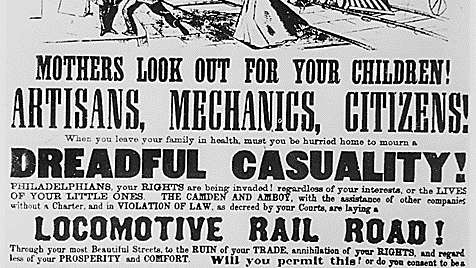
Why is there limited train travel in the USA?
The aviation industry in the United States receives an astonishing amount of federal subsidies to keep it afloat, while the rail industry receives comparatively very little. Throughout the COVID-19 pandemic, via three separate statutes, the 10 major US passenger airlines together received more than $54 billion in direct payments ($25 billion, $15 billion, and $14 billion). Congress also appropriated another $25 billion in subsidized loans from the US Department of the Treasury (only a fraction of which airlines have used) and suspended the 7.5 percent excise tax on domestic air travel as well as payments to airports and contractors. Meanwhile, during the COVID-19 pandemic, Amtrak received limited federal aid, primarily through the American Rescue Plan Act (ARPA) in 2021, which totaled only $1.69 billion.
Unequal subsidies between aviation and rail industries are a fundamental aspect of American transportation history. Starting in 1960, airlines more often operated at a loss than a profit. However, between 1918 and 1998, the US federal government spent $155 billion in support of commercial aviation activities to keep them afloat and growing. Meanwhile in the 50 year period of 1921-1971, rail transportation in the US got a grand total of $65 million in federal transportation funding. Even after the federal government created the quasi-public corporation Amtrak in 1971, they continued to subsidize air travel and highways at a rate 63 times higher than passenger rail.
Why do many of us think of flying before taking a train? Because the American government has poured billions of dollars into making that decision for us. By choosing to ride the rails rather than fly, you can not only significantly decrease your personal greenhouse gas emissions, but you can step out of the culture of manipulative propaganda that the aviation industry and the Unites States Government designed. This holiday season, stick it to the man and take a train to your destination.
Featured:
-
Hint: It's because of Climate Collapse
-
At what point does it become a moral imperative for all of humankind to participate in civil disobedience?
-
How to bank responsibly in an era of climate collapse.
-
Open Letter to drivers inconvenienced by general disruption protests
-
A compilation of books, movies, articles, and ways to take action to protect Black lives
-
Nadia Colburn, PhD and member of Extinction Rebellion Media team, discusses how to talk about the climate and ecological crisis with family and friends.
Upcoming Events:
-
Tue Apr 7th @ 10 a.m.
-
Thu Apr 9th @ 10 a.m.
-
Thu Apr 9th @ 7:45 p.m.